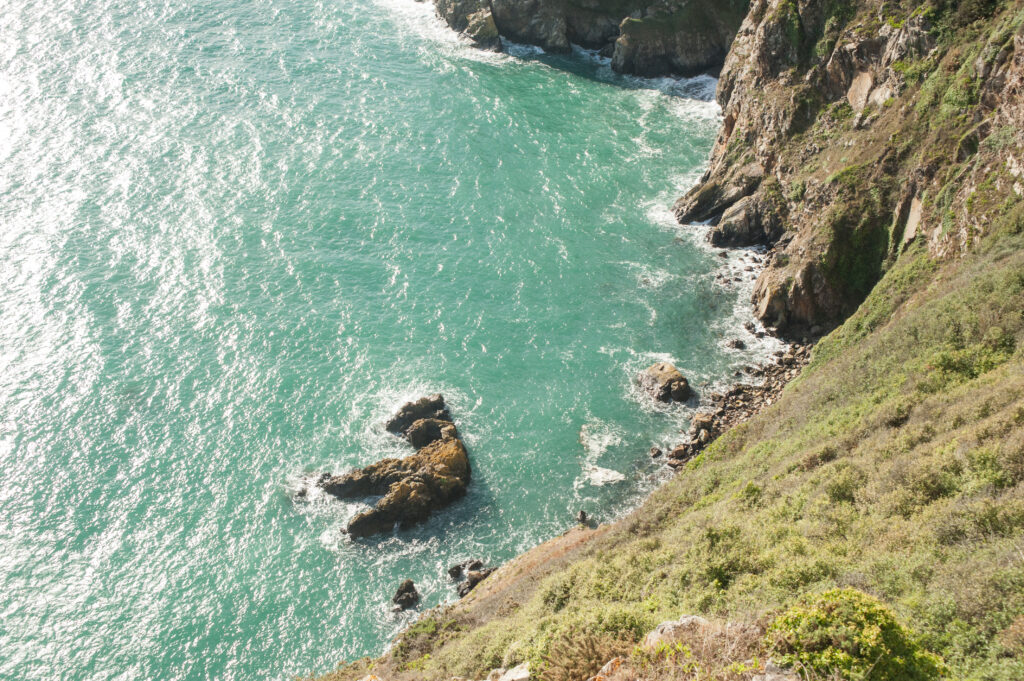
This is THE must-see spot on your holiday! The Pointe de Plouha, home to Brittany’s highest cliffs, is almost a pilgrimage for many. The vastness lies there, right before you, untouched. The power of the elements, the dizzying sense of freedom, the seabirds. Whatever the weather, a panorama that will take your breath away!
To help preserve and protect the site as effectively as possible, the local council invites you to follow the designated routes, which will take you through charming hamlets of old fishermen’s cottages.
To discover the most beautiful spots along the cliffs between Tréveneuc and Paimpol, via Plouha, pick up a copy of A map of the Route des Falaises. This document is available to you in our offices.
A bike You can also enjoy the stunning views from the cliffs at Plouha, such as the famous Port of Gwin Zégal.
Following the GR 34 along the cliffs, you’ll pass through the the beaches of Plouha, each one different. Above the Bonaparte Beach A memorial stone commemorates the Shelburn Network.
A little further inland from the coast, be sure to stop off at Kermaria Chapel to see the unusual fresco of The Dance of Death.

A gem to explore and admire for kilometres on end
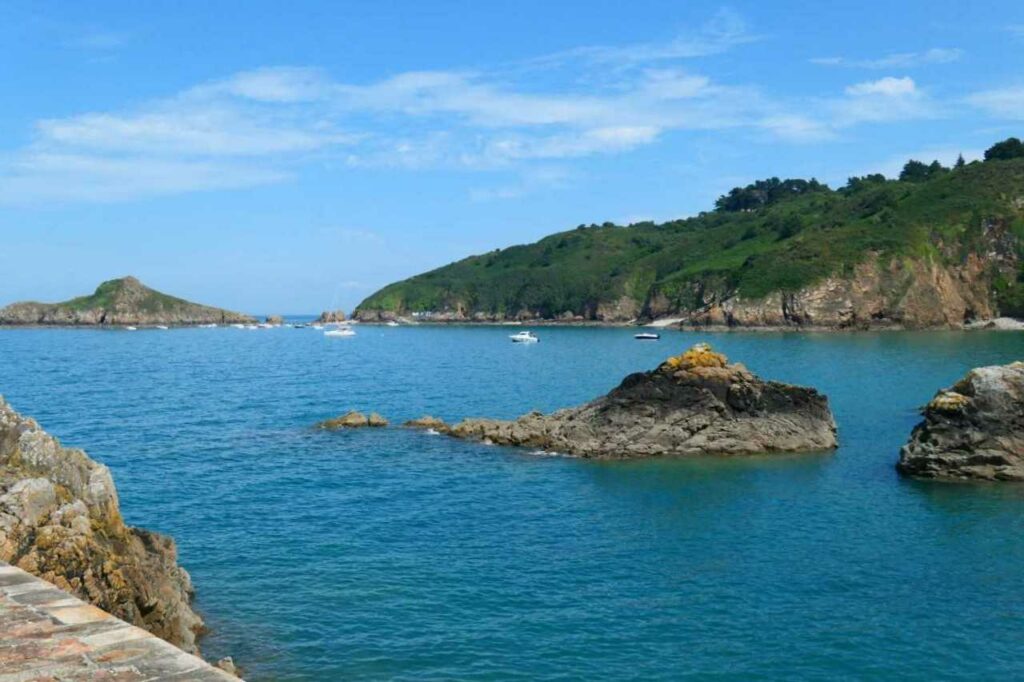
Rugged and wild, jagged and dotted with coves and caves, the cliffs of Plouha rise up towards the sea as gigantic walls of gneiss and granite. Standing over a hundred metres high, they boast the title of the highest cliffs in Brittany. In this dizzying, almost inaccessible rocky landscape, flora and fauna have, over time, found precious passageways and refuges for their life and survival. Impenetrable rock faces, languid sandy beaches, sheltered coves and bands of grainy pebbles form a landscape rich in sensory contrasts, where familiar landmarks fade away, making way for a special encounter with Breton nature. The Pointe de Plouha, beyond its sublime panoramic views of the Palus and Beg Hastel, offers delightful micro-landscapes just a few metres away. Like a cliff randomly landscaped with its ecological niches, it harmoniously displays subtle floral arrangements from spring to autumn. As you wind your way along a coastal path with steep gradients, intimate coastal valleys carved out by the flow of persistent rias appear here and there. Green and deep, they provide precious habitats where willows, oaks and ash trees thrive. A rich variety of wildlife goes about its business here. A relic of an ancient seafaring tradition, Gwin Zégal – “rye wine” in French – is one of the last two pole-supported harbours in Brittany. This very ancient method (said to date back to the 5th century) was adopted by the fishermen of Plouhatin in the mid-19th century to overcome the difficulties of building a harbour on the coast. The piles – trunks of American red oak complete with their roots – are regularly replaced during the high tides of late winter. With each new installation, in a final burst of growth, young leaves appear in spring, offering a surreal vision of a fleeting Eden. Glistening on the sandy shore left behind by the sea, their reflections evoke a distant past when harbours had nothing to moor their vessels to but a few wooden posts set into piles of stones.

A preserved heritage
A few hamlets are scattered across the Plouha countryside. Built from the 5th century onwards, they have been home to generations of farmers and fishermen over the years. Kersalic, comprising modest stone houses with a single door and windows on the façade, is a fine example of this typical local architecture. Alongside subsistence farming, coastal fishing was the only maritime activity practised along these steep shores. The slipway at Port Moguer, built from pink granite in the 1840s, provided shelter for a few trawlers and gillnet boats. A navigation mark situated nearby is one of two land-based beacons which, when aligned with the other, once served as a guide for approaching the coast. Standing 25 metres tall and built as a hollow arch, it is the last remaining local example of a navigational aid whose principle dates back to the very origins of navigation. The customs officers’ path, dotted with shelters and observation posts, has been the scene of extensive clandestine activity throughout its history. At twilight, by the light of the full moon or in the gloom of night, smugglers of all kinds would land in the coast’s many coves. For a very different purpose, these anchorages were used during the Second World War by the Shelburn network, which helped some 135 airmen and around fifteen Allied agents to escape to England. The old route of the coastal path can be traced in spring, following a line of apple trees in bloom that sprang up from apple cores left along the way by customs officers. Thus, seemingly trivial actions can leave a lasting mark on the landscape.
THE REAL TREASURE OF THE CLIFFS
The vegetation…
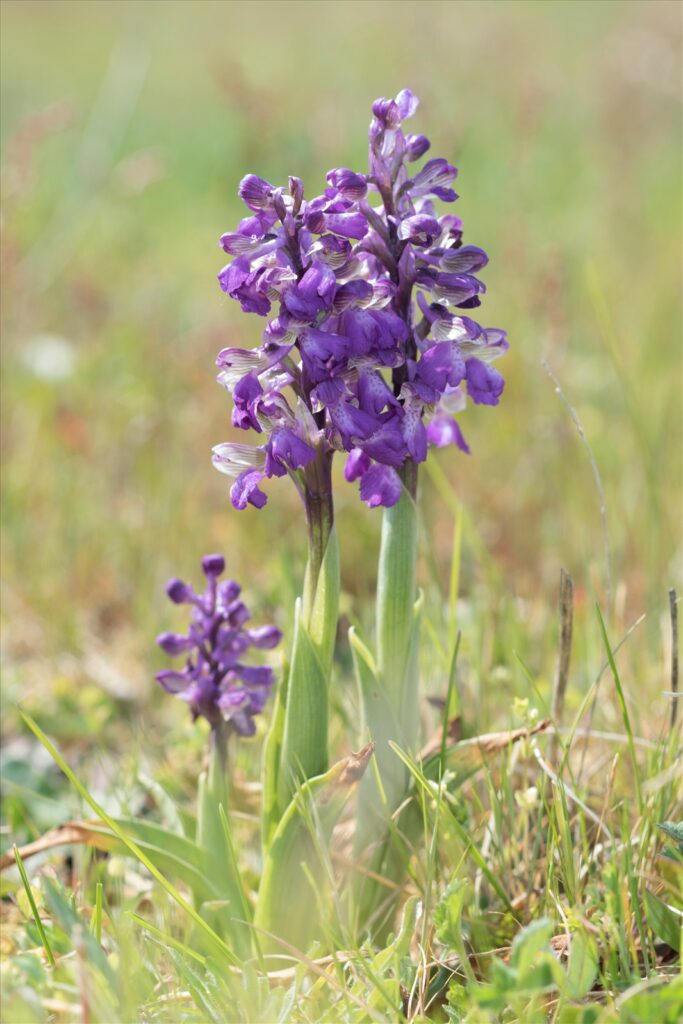
Dating back to time immemorial, crust-like and leaf-like lichens colour the bedrock black, yellow and grey. A symbiotic association between a microorganism whose tissues capture light and a fungus whose filaments draw out nutrients, they remain relatively little understood scientifically on the cliffs of Plouha. Defying the vertical walls, ledges and outcrops, regularly sprayed with sea spray, they patiently prepare the ground for their rooted counterparts. On the soil formed by their chemical action and natural erosion, advanced plants emerge that are capable of withstanding the harshest drought. Sea fennel, with its tangy flavour of sea fennel, and rock spergularia, with their multitude of delicate pink flowers, have thus developed thick tissues that give them the succulence needed to retain water and survive in this arid, desert-like environment. Once cultivated right up to the edge of the cliffs, the steep slopes have now been taken over by, amongst others, blackthorn and eagle fern. As soon as the fine weather sets in, the moorland gradually takes on the white of flowering blackthorns, the golden yellow of European gorse and the mauve of grey heather. Off the coast of Beg Hastel, the islet of La Mauve – whose name probably derives from the Gallo word ‘Maouve’, meaning ‘seagull’ and referring to seabirds in general – stands out against the sea like an iceberg covered in seabird guano.
…And the animals that live there
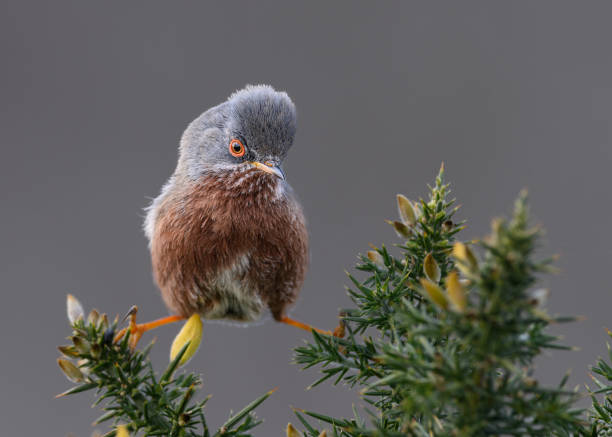
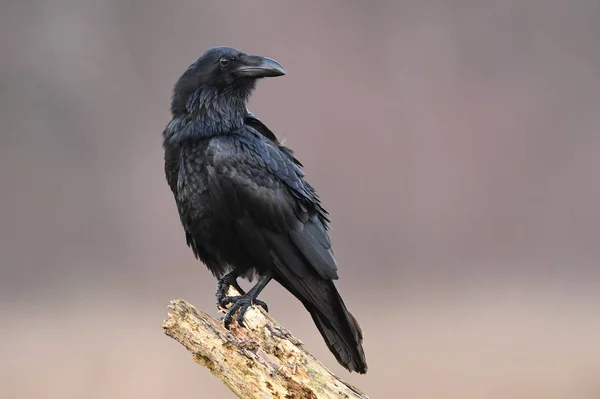
The high coastal cliffs are home to some remarkable birds. Suddenly taking off from its nest nestled against the steep cliff face, the peregrine falcon has just swooped down on its prey in a lightning-fast dive. Whether pigeons or passerines, caught out at speeds of nearly 250 kilometres per hour, they stand no chance against this formidable predator. Worshipped as a god since ancient Egypt and a favourite of falconers during the Renaissance, the peregrine falcon has now found refuge in the inaccessible sheer cliffs of the Plouha coastline. The raven, that giant amongst passerines, finds refuge in the same habitat. However, its hunting technique is quite different. In the open spaces of the plateau, it skims low over grasslands, moors, pastures and crops to catch its prey by surprise. A scavenger and opportunist, it easily spots sick animals. It does not turn its nose up at eggs or ripe berries. Long reviled by humans for its reputation as a «gravedigger», even though it was in fact performing a vital public service, it is now a protected species. It is a unique spectacle to see these two masters of flight compete in grace and acrobatics, in a ballet of powered flight and gliding. Along the coasts, seabirds abound. Crested cormorants, gulls, northern fulmars, and even house martins can be found in scattered colonies on the cliffs and isolated skerries. Of particular note is the presence of the pitchou warbler, whose name «pitchou» means ‘small’ in Provençal and evokes the bird’s diminutive size; it is most easily spotted in spring amongst the vegetation of the ancient heathland. Several species of protected marine mammals are found in the choppy waters; these include seals and dolphins, which, to avoid disturbing them, should be allowed to approach if they wish, rather than being approached.
A remarkable, sensitive and protected natural area
The cliffs are home to a wealth of remarkable natural habitats, many of which are of European Community interest, including unspoilt bocage, steeply sloping wooded areas, scree slopes and ravines, and dry heathland.
The site comprises Type II ZNIEFFs along the western shore of the bay and Type I ZNIEFFs at Pointe de Plouha and Gwin Zégal, near Palus beach. “The marine area is designated as a Trégor Goëlo Natura 2000 site.” for a Special Protection Area (ZPS) and a Special Area of Conservation (ZSC) under the European Birds and Habitats Directives. Much of this magnificent, picturesque coastline has been a designated conservation area since 1979. As for Bréhec Cove, it is a site of geological interest designated by a Prefectural Order for Geological Protection. It is therefore strictly forbidden to remove minerals from this site or to damage it: please put any stones back in place if you move them whilst foraging for shellfish!
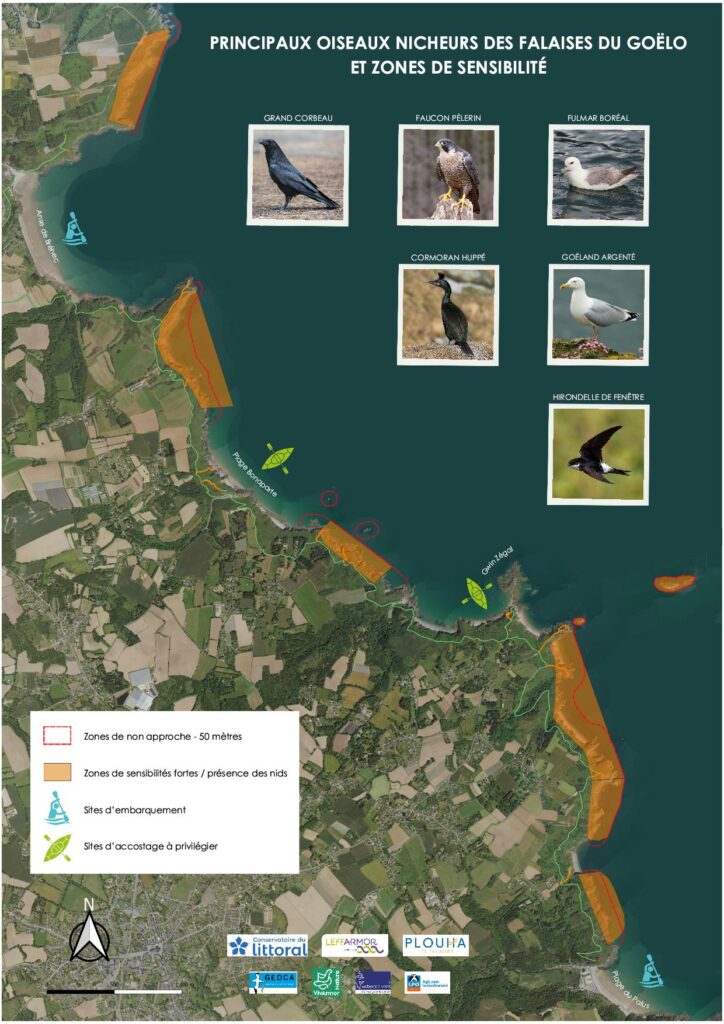
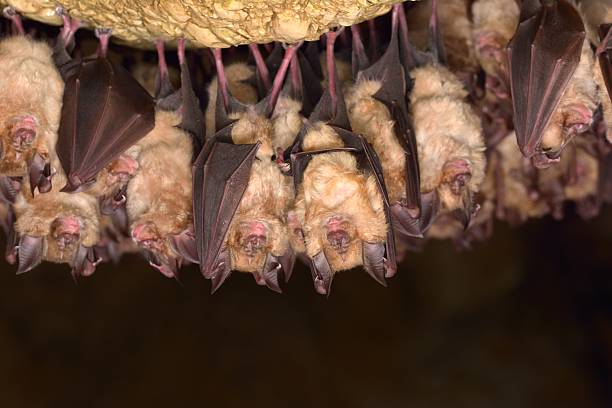
In 2025, the census of birds nesting on cliffs, carried out annually by the Côtes d’Armor Ornithological Study Group (GEOCA), enabled nature conservation organisations (GEOCA, VivArmor Nature, Bretagne Vivante, LPO Bretagne) to produce a summary document identifying the areas and distances where human activities – whether on the water, in the air or on land – should be avoided during the nesting period (from March to the end of September). The Breton Mammalogical Group has been working closely with the site’s managers for some twenty years on, amongst other things, the study and protection of bats, given the rich diversity of 16 species found on the cliffs of Plouha (22 species are recorded in mainland France).
The coastal strip is primarily owned by the Conservatoire du Littoral; the site is jointly managed by Leff Armor Communauté and the municipality of Plouha. The team of coastal rangers responsible for the Conservatoire du Littoral’s properties forms an integral part of Leff Armor Communauté’s environmental department. They oversee monitoring, supported by a network of stakeholders, including the Community Integration Projects, which maintain the Grande Randonnée trail (as well as the Shelburn trail), the municipality’s technical services and municipal police, as well as the Falaises d’Armor Tourist Office, which helps visitors discover this treasure and works to raise awareness about its protection. All management is carried out in accordance with the remit of the Conservatoire du littoral, which by 2026 will own approximately 160 hectares of permanently protected land.
The cliffs are very popular with visitors. Accessing them on foot via the authorised paths is essential for their conservation. Certain sections, particularly on the headlands, are undeveloped and feature unpredictable, dangerous passages that can impact the flora and fauna at certain times of the year. Access to these areas may therefore be prohibited.
Let’s protect these nesting sanctuaries – no photograph can ever replace seeing animals in their natural habitat!