Moulin de Blanchardeau
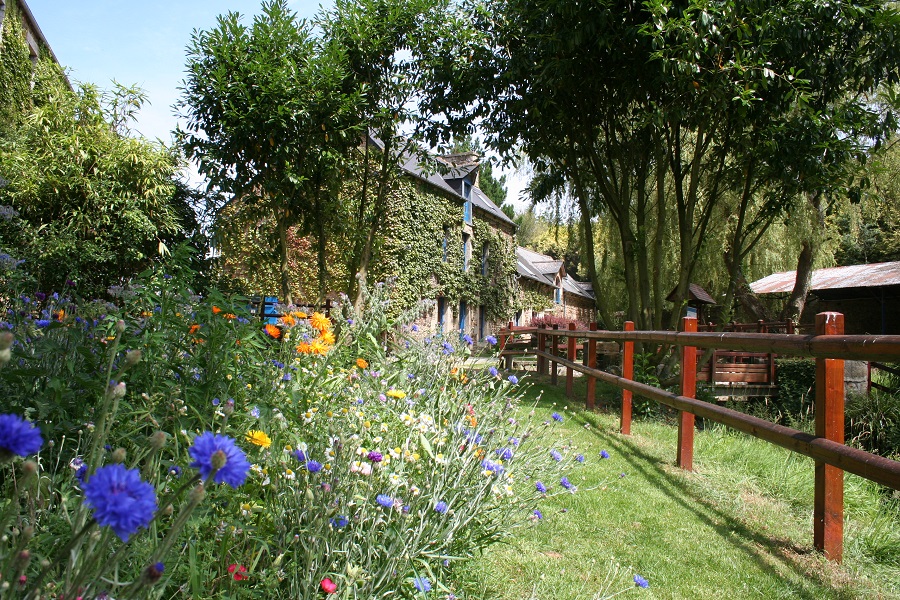
The Blanchardeau Mill dates back to before the Revolution. It subsequently came into the possession of the Duke of Aumale (1822–1871), son of Louis-Philippe and heir to the Duke of Condé, who had inherited it from the Rohan-Soubise family.
According to the 1848 census, the mill, which was run by Jean-René Huet, produced 183,116 kg of flour worth 35,492 francs. It employed four men and four women, earning 0.75 and 0.60 francs a day respectively, as well as five children.
The mill was regulated by a decree dated 25 February 1869.
Le Friec, based at the Moulin du Corre, purchased the Lanvollon mill – which had been bequeathed to the Institut de France upon the death of the Duke of Aumale in the early 1880s – and converted it into a flour mill. His son, François le Friec, ran it until his death in 1973. It was then taken over by Mr Moisan, who continued to run it for a few more years before it was finally abandoned.
The site was purchased by the Lanvollon-Plouha Community of Communes, which converted it into its headquarters and to house its various departments. (source: Côtes d’Armor Departmental Archives). The exterior of the mill is open to the public and exhibitions are regularly held in one of the building’s rooms.