Chapel of Notre Dame de Douannec
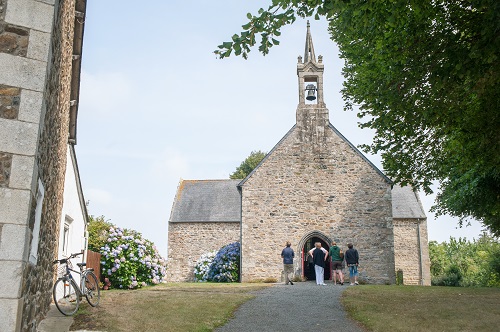
Although to date no document attests to the exact origin of the «Douannec» chapel, numerous recently discovered artefacts suggest that this building is a much larger reconstruction of a small manor chapel that belonged to a neighbouring noble house, the ruins of which can still be seen.
The Douannec Chapel was seized and sold as national property during the Revolution, on 22 Fructidor, Year II, but it escaped destruction – unlike the four other chapels in Gommenec’h – thanks to the generous efforts of Pierre Duval, which came to a successful conclusion in 1818.
Today, amongst other things, one can admire numerous ex-votos and the polychrome statues (some of which are astonishing) from the other chapels that were sold; after a 23-year absence, they reappeared, as if by miracle, in the chapel that had been saved.
The pilgrimage in honour of the chapel is held on the second Sunday in September.
The name "Douannec" derives from the Breton "douan" or ‘pouan’, meaning pain, sorrow or affliction. It is the Virgin to whom pilgrims in distress come to pray.